Ali verde is the deliciously spicy green sauce you’ll want to put on everything.
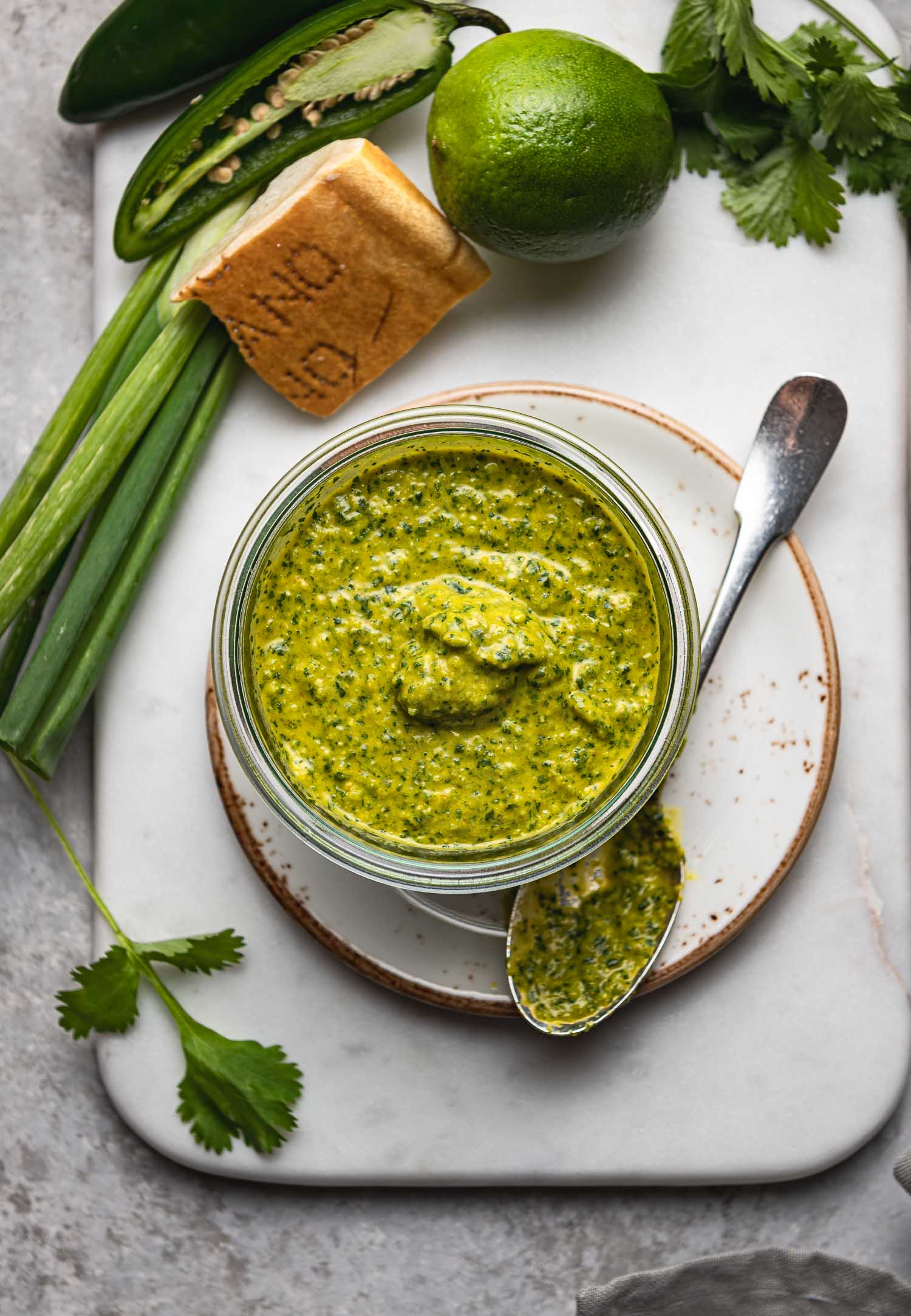
I’m a condiment girl. Always have been. If it’s edible I will want to dip, dunk, douse or drizzle some sort of sauce or topping over it. Well, maybe except corn on the cob. No butter for me, thanks.
The search is never ending for a new sauce to add to my condiment cache. One of our more recent favorites around here is aji verde, a Peruvian green sauce. It’s a staple accompaniment to most of the menu items at the Peruvian restaurants we visit and I always ask for extra to take home with me to enjoy at home.
Aji verde is a zesty, creamy sauce, bright and herby, adding kick to fried or grilled meat, seafood or rice dishes or just plain yucca fries, which it is most popularly served with. It is similar to Argentinian chimichurri or Italian salsa verde in that it is herb-based and adds brightness to a dish but aji verde has two ingredients that make it distinctly Peruvian: aji amarillo (Peruvian chili pepper) and huacatay (Peruvian black mint).
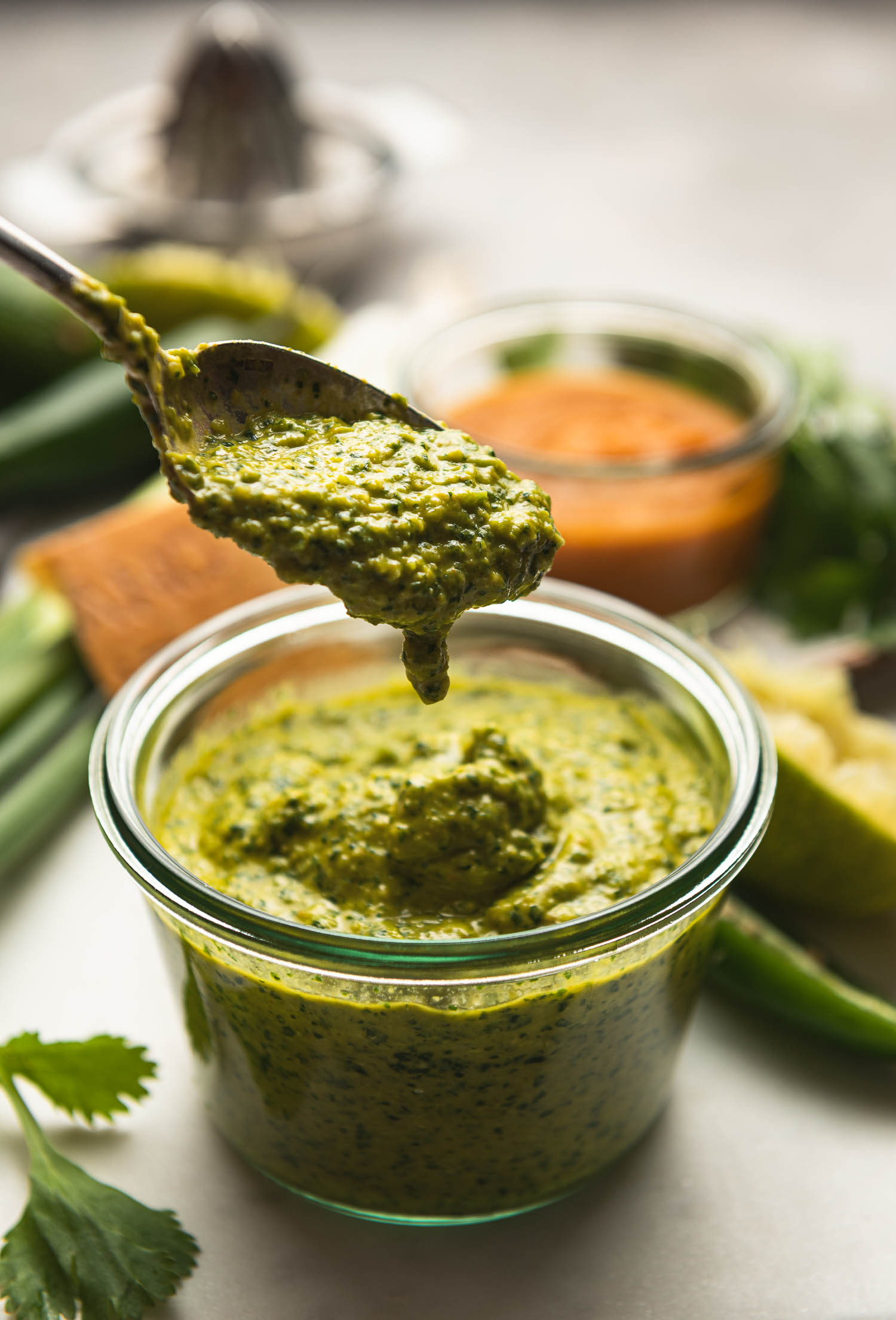
These days it’s much easier to source once hard-to-find ingredients like these so the challenge for me was not in obtaining the aji amarillo or huacatay–both were available at my local Latin market (and also on Amazon). The goal was come up with a recipe that would be as close to traditional as possible and taste as good as the aji verde my local restaurant serves.
In my research, I discovered a motley crew of ingredients–aji amarillo, huacatay, cilantro, jalapeños, garlic, green onion, lime juice, aioli and cotija (or Parmesan) cheese–an unexpected combination for me, maybe because of my lack of familiarity with Peruvian cuisine, but they work together beautifully. I couldn’t find a source online that offered answers to how a Peruvian recipe had come to use Mexican (or Italian) cheese and mayonnaise. What I did find was huge variation in the use (or omission) of these ingredients and what passed as authentic or traditional.
As noted below, one substitution I did make was to use Greek yogurt in place of the aioli (or mayo), just to cut the richness and fat. It’s an easy one-to-one swap and you can use whichever you prefer in the recipe. Also, since the huacatay might be the hardest to source locally, I tested my recipe both with and without it and for the small amount called for, I decided that it would be fine to leave it out.
The takeaway from this is that aji verde is flexible and easily adaptable, which is what I have done here with great results. After a handful of trials, I had a green sauce that my husband and I couldn’t help but put on everything. We’ve been using this sauce on roasted meat and vegetables, rice dishes but I know we haven’t even scratched surface on all the ways we can enjoy it…just not on corn on the cob.
(Please see my notes below for additional details on the ingredients and substitutions.)
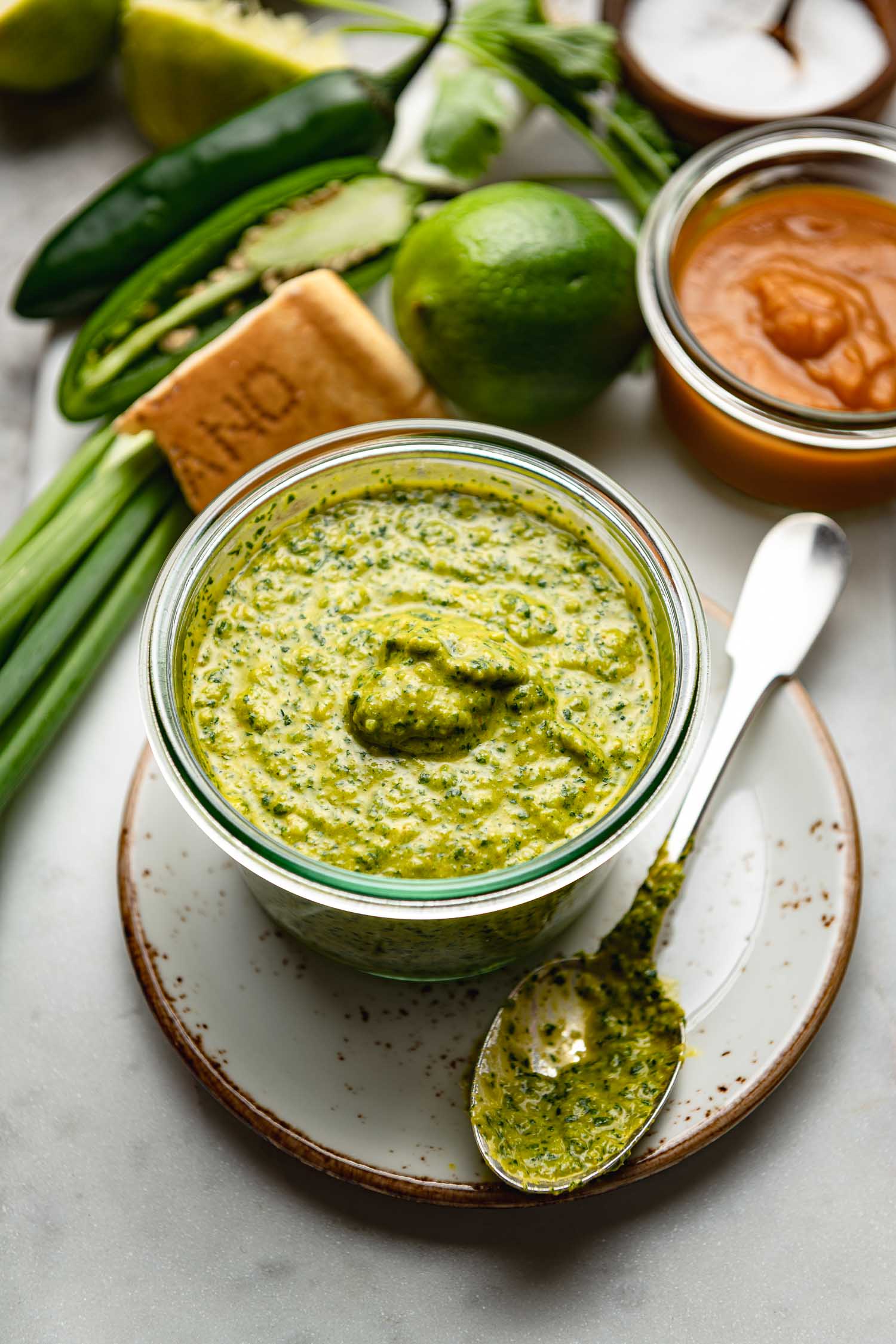
Aji Verde Ingredients and Notes:
- Aji Amarillo – You can find, in jars, aji amarillo peppers or aji amarillo paste. I use the latter for convenience and for me, this is the nonnegiotable ingredient, though I have seen some recipes that don’t include it. Besides its vibrant yellow-orange color, it has a flavor that’s just different enough that I don’t know a suitable substitute to recommend. It tastes clean, fruity, with just a hint of bitterness…and it’s spicy. It’s like a concentrated bell pepper with heat.
- Huacatay – This also comes in a jar. I tested my recipe both with and without black mint paste and found that it can be left out since it can be a little harder to find.
- Cilantro – You can use between one to two cups though I lean more towards the higher amount as I usually just take a cilantro bunch and throw it in my food processor, stems and all.
- Jalapeño Peppers – You can control the heat of the sauce by removing the seeds and ribs inside the peppers. The aji amarillo paste is moderately spicy already so keep this in mind.
- Garlic – The flavors of this sauce get bolder over time so you may want to start with two garlic cloves if you don’t want a garlic-forward sauce.
- Green Onions – I like to use two to three, both green and white parts.
- Aioli – Traditional recipes call for homemade aioli but most use store-bought mayonnaise or half sour cream and half mayo. I prefer a less creamy taste (even though I like the creamy texture) so I use nonfat or low fat Greek yogurt instead (and less of it by ratio than in other recipes).
- Cotija Cheese – This is the most common cheese for aji verde but Parmesan cheese is also a popular option. Other salty cheeses might work here but I haven’t experimented with them yet.
- Vinegar – Some recipes use vinegar but I found that I needed it only during my initial trials when I used mayonnaise or a higher fat content Greek yogurt to balance the richness of the sauce. With low fat or nonfat yogurt, the vinegar wasn’t necessary.
- Lime Juice – Used for brightness. The juice of one half to a whole lime is usually enough.
- Salt, Pepper, Olive Oil – all used, to taste.
Ali Verde: Peruvian Green Sauce
Ali verde is the deliciously spicy green sauce you'll want to put on everything.
Ingredients
- 3 – 4 tablespoons aji amarillo paste
- 2 – 3 cloves garlic, peeled
- 1 1/2 – 2 cups fresh cilantro with stems, packed
- 3 green onions
- 2 jalapeños (1 deseeded for milder heat)
- 1 lime (juice)
- 1/4 – 1/3 cup plain yogurt (or mayo) (See Note)
- 3-4 tablespoons Parmesan cheese (or cotija cheese)(See Note)
- 1 tablespoon olive oil
- salt and pepper, to taste
Optional Ingredients
- 1 tablespoon huacatay paste (black mint paste)(See Note)
- 1 teaspoon vinegar (See Note)
Instructions
-
Process the ingredients from the aji amarillo paste to the olive oil (all except the salt and pepper). Season with salt and pepper, to taste. If using vinegar, taste the sauce first to decide if you want to add it. You can also add more Parmesan cheese to suit your taste. Store in the refrigerator in a sealed container. The flavors become more pronounced as the sauce sits.
Recipe Notes
Yogurt: Aioli (or mayo) is the traditional cream base. I like to use plain nonfat or low-fat yogurt. You can also sub the yogurt with half mayo and half sour cream. (Cottage cheese might work here, too, but I haven’t tried it.)
Parmesan Cheese: Cotija cheese is the traditional salty component but feta might work, too, though I tested this recipe using it.
Huacatay: I have made aji verde with huacatay but it’s also wonderful without it and for how hard it may be to source, it’s okay to omit.
Vinegar: I like to use vinegar only to balance the creaminess of the sauce. If you use mayo or full fat yogurt you can add a little vinegar to balance the flavors. Otherwise, you can omit.




Fantastic! I actually grew the black mint years ago in order to make something similar that I had in Cusco and it continues to try and take over my garden! Great recipe.
Wow, that’s great! I haven’t seen black mint in person but luckily, the Latin market sells it in a jar.
sounds delicious. I made some homemade tabasco sauce the other week. So easy and so good. Your sauce sounds full of flavour!
cheers
sherry