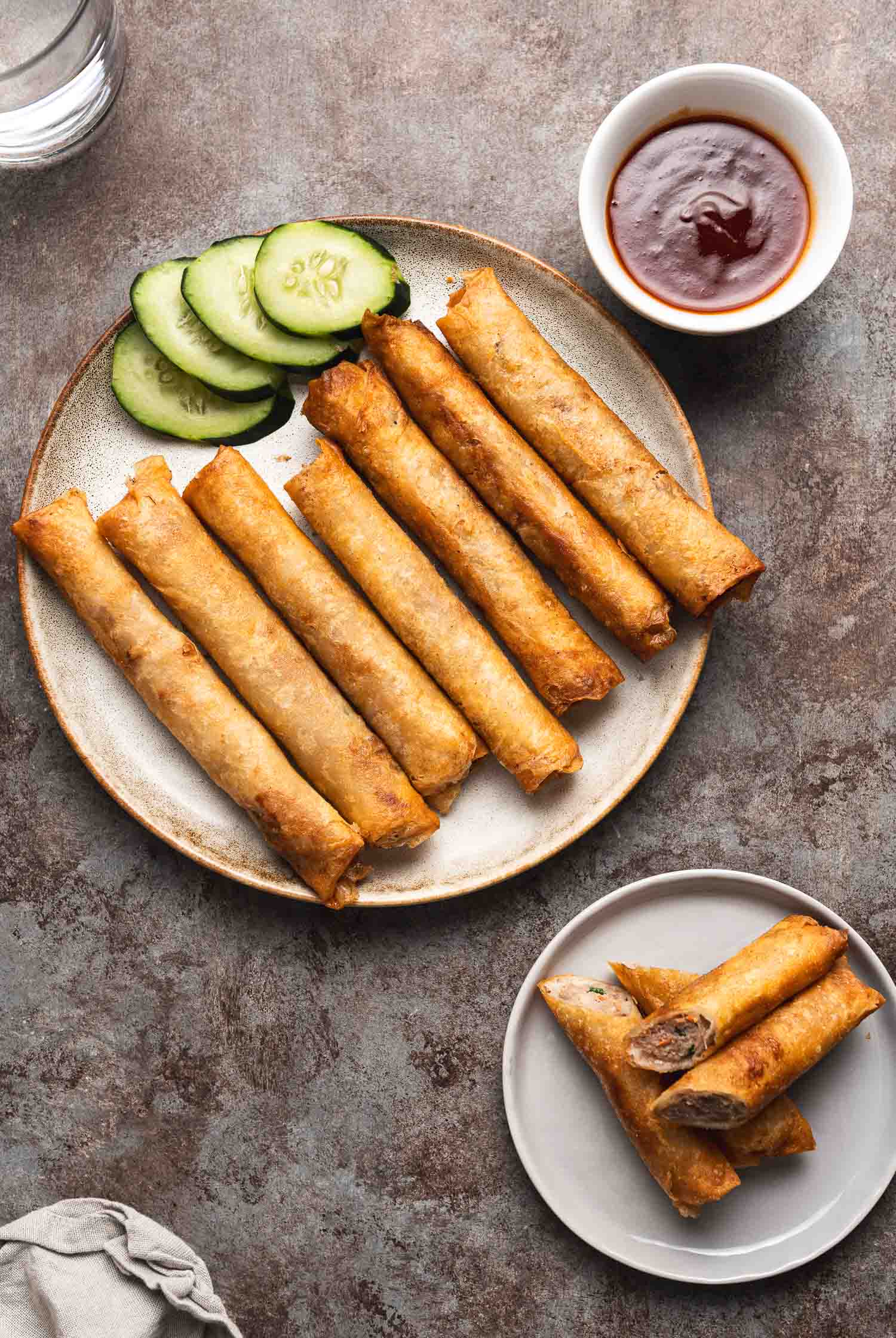
Lumpiang Shanghai are Filipino fried spring rolls. With a flaky, crispy exterior and a flavorful meat-vegetable filling these appetizers are a hit at every party.
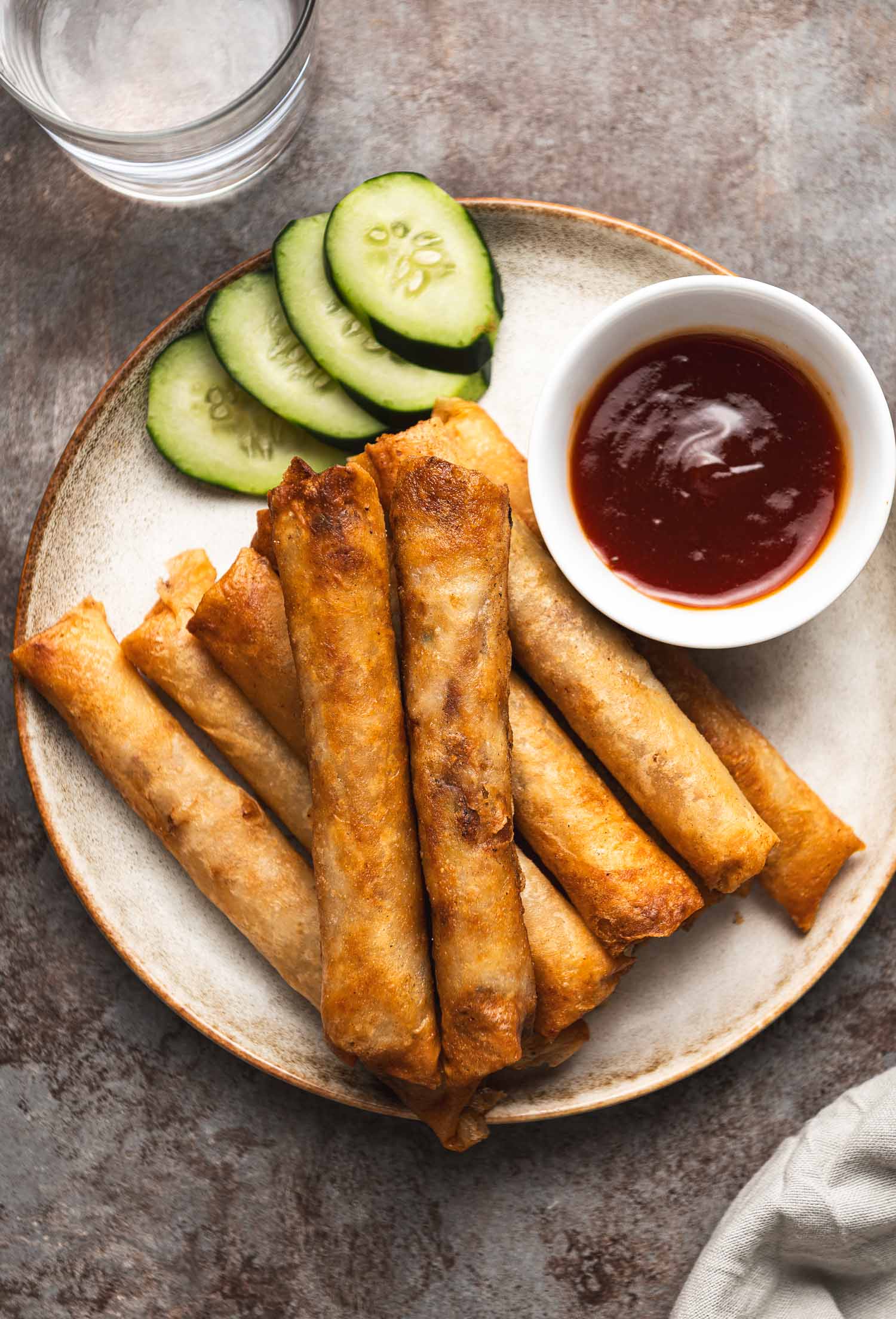
Two weeks ago this blog turned 16 so it seemed only fitting to mark the occasion by sharing a recipe for one of the most popular dishes at Filipino gatherings, Lumpiang Shanghai. Literally translated, the term means Shanghai-style lumpia, though there’s no definitive account to explain how this Filipino version of fried spring rolls came to be associated with the Chinese city. In fact, there are numerous types of lumpia and they all have roots in Chinese cuisine.
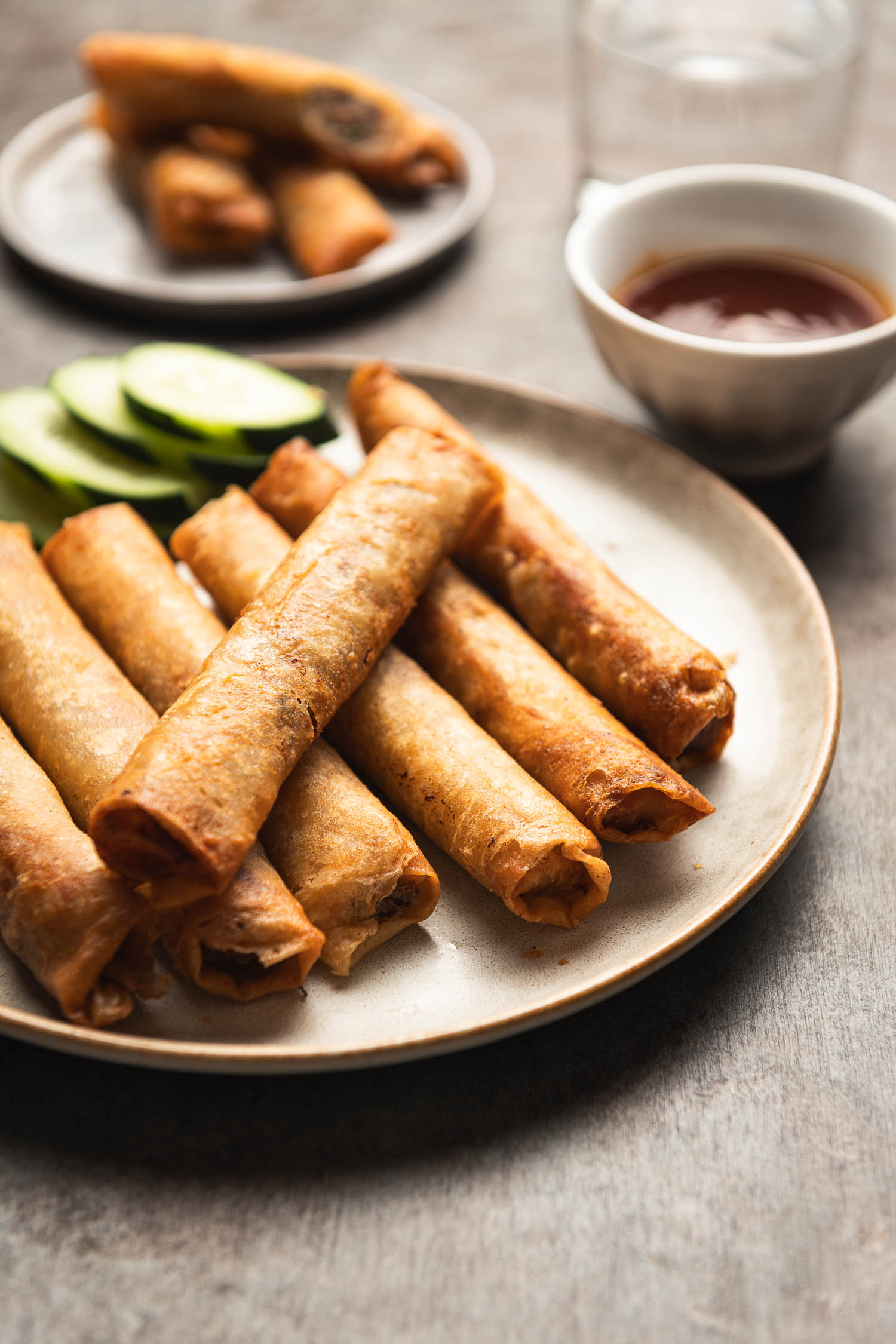
These four are the most familiar to me (and probably the most popular in the country) though there are numerous regional variations:
1. Lumpia – Fried with a filling of sauteed vegetables, with or without meat. This is the most like the Chinese egg rolls that are popular across the globe. The main difference is Filipinos serve lumpia with a garlic/vinegar dipping sauce rather than sweet and sour sauce.
2. Lumpiang Sariwa (Fresh Lumpia) – A vegetable-based lumpia in a thin, crepe wrapper and topped with a sweet garlic-peanut sauce. You can find my recipe here.
3. Turon – This is a sweet spring roll made with plantain, jackfruit and sugar, fried until caramelized. My recipe is here.
4. Lumpiang Shanghai – Fried lumpia with a meat-vegetable base, thinner and more cigar-shaped compared to regular lumpia and served with sweet and sour sauce (or sweet chili sauce or banana ketchup).
Of the four I listed above, lumpiang Shanghai are the ones you’ll see at almost every Filipino party and they are always the first to disappear from the buffet table. Filipinos are generally known for preparing too much food but leftover spring rolls are unheard of. With a flavorful, meaty filling and crispy, flaky shell, they’re much too easy to eat, especially dipped in sweet and sour sauce.
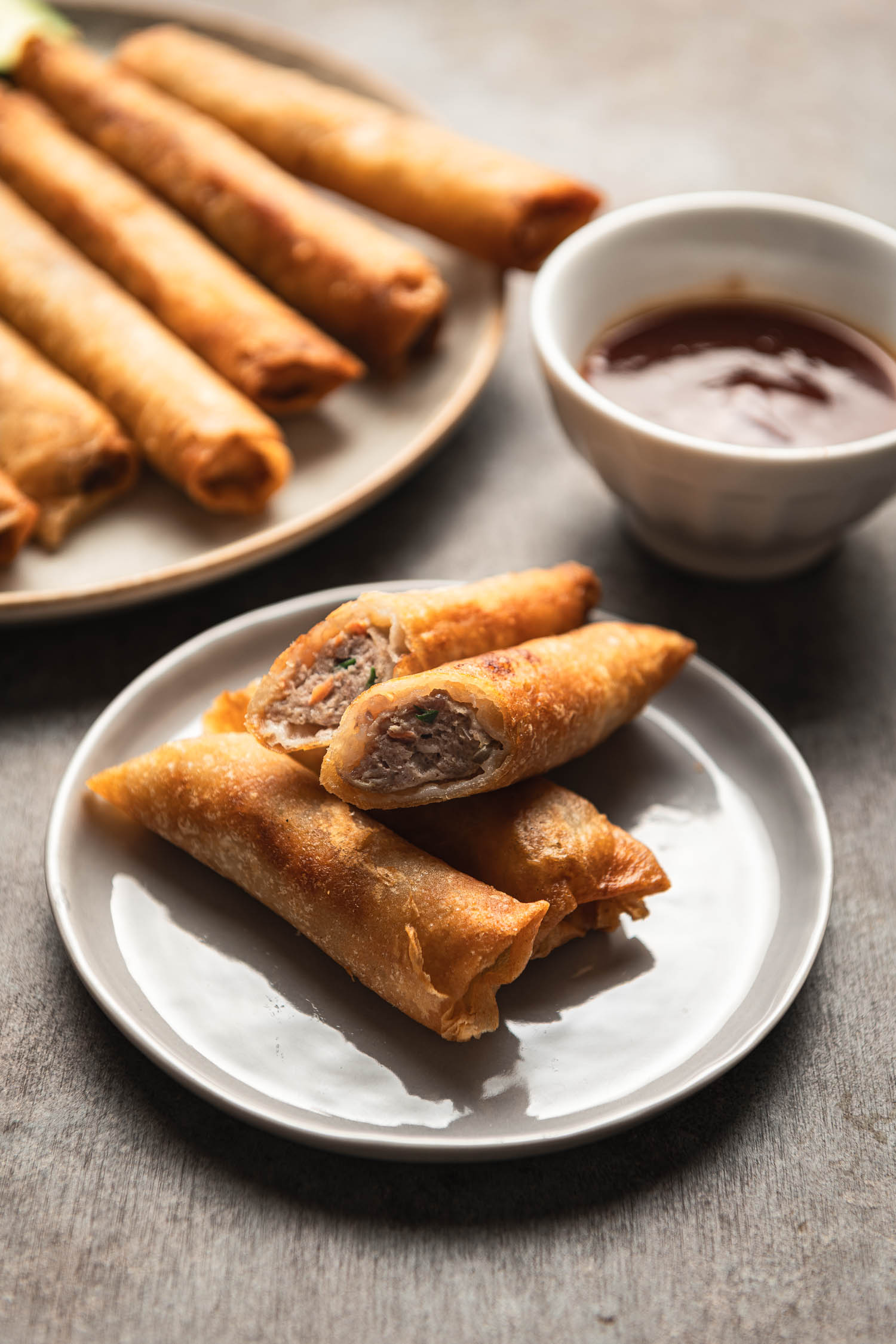
These days the lumpia I enjoy at family gatherings are usually picked up at a restaurant by an aunt or cousin but since this blog has just reached a milestone, I thought it would be fun to make my own.
I remember afternoons as a teen sitting at the kitchen counter with my sisters separating the thin, delicate wrappers and carefully rolling the lumpia in tight, uniform cigars. My mother prepared the meat filling in large quantities and taught us how to properly roll the lumpia not only so they would be pretty but mainly so they wouldn’t fall apart when fried. In one afternoon we would roll at least one hundred pieces to be frozen and cooked in small batches, as needed.
Regarding the filling, every family will have their favorite combination of meat-vegetable-seasonings and even a preferred wrapper. This recipe I share here is my mother’s with just a minor modification by me. I list the components below, as well as popular variations.
Spring rolls are a fun finger food and friendly for adaptations to suit different tastes. If you decide to prepare them for a party one day just watch them disappear right before your eyes.
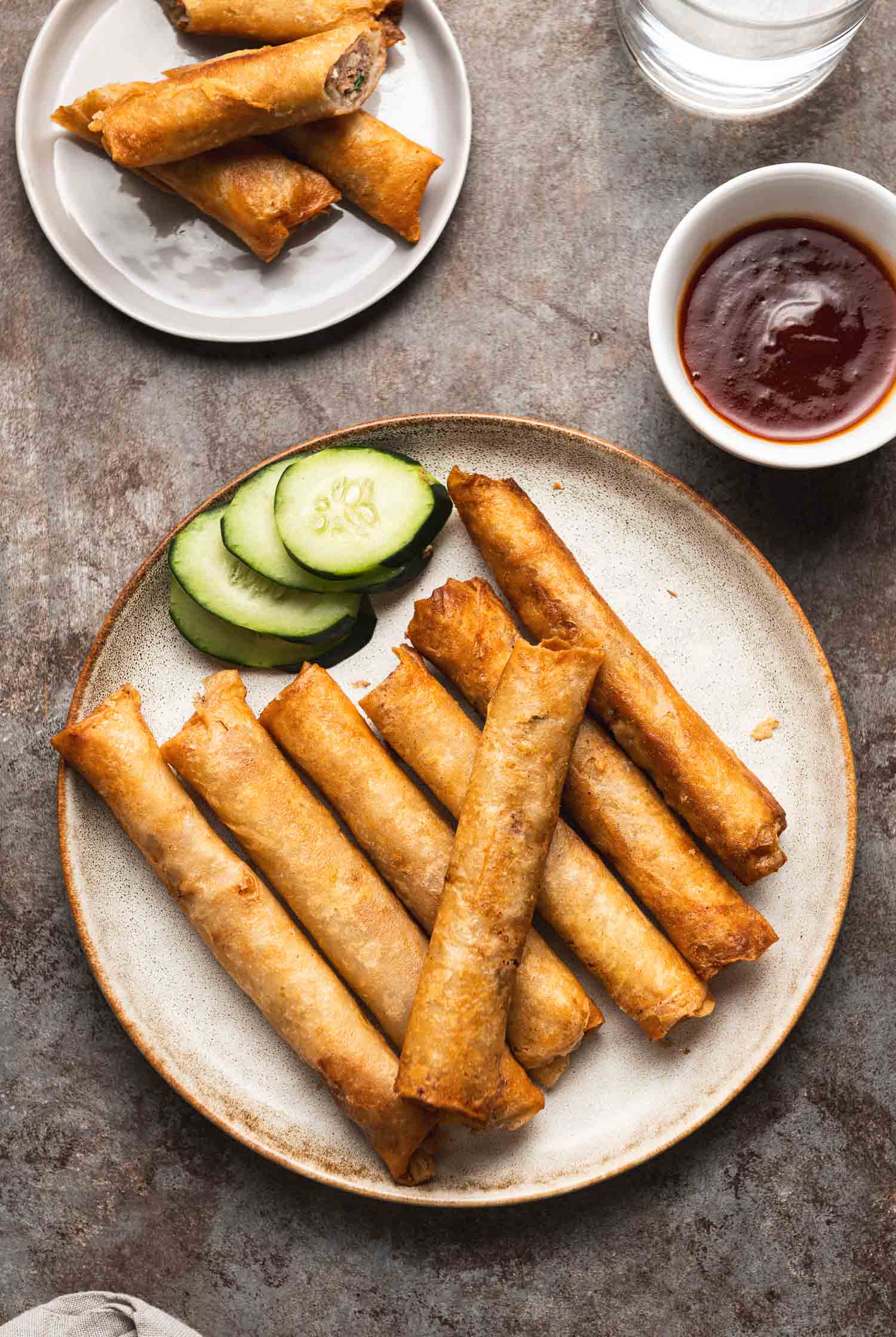
Lumpiang Shanghai Components
Meat. True to its Chinese roots, ground pork or a combination of ground pork and shrimp are the most common meats to use in lumpiang Shanghai. My mother, however, uses a 50/50 mixture of ground beef and ground pork for improved texture. There is no strict rule here. I have tasted lumpia made with ground chicken and ground turkey with good results, too. The only consideration would be fat content. While I try to cut fat when I can, it is helpful here to keep the filling from being dry.
Vegetables. The most traditional vegetables for lumpiang Shanghai are garlic, onions, green onions, water chestnuts, carrots and Chinese celery. If you compare a handful of recipes you will see all or a combination of these vegetables used. I have noticed that most modern recipes don’t use water chestnuts but my mother insists on them for texture. On the other hand, she omits the carrots and Chinese celery but since I am a carrot lover, for the version I share here, I have included them for color and to up the vegetable ratio. I’ve left out the garlic simply because I’m lazy but feel free to use a clove or two in this recipe.
Seasonings. A no-frills recipe, salt, pepper and soy sauce are all you need but I like to add onion powder for extra umami. Some recipes call for oyster sauce but I don’t think it’s necessary, though again, if you like it, please use it.
Wrapper. There are so many varieties of egg roll wrappers available these days that the options are daunting even to me. Any standard wheat-based wrapper will work but since it’s what my mother likes to use, I am also partial to the traditional Filipino lumpia wrappers that are paper thin and crepe-style These wrappers are round and white (compared to most wrappers that are square and cream/yellow colored) and can be found in the freezer section of most Asian markets. When fried, the thin wrappers are flaky and crispy and don’t overwhelm the meat filling. This is the brand I use but any spring roll/egg roll wrapper you find would work, too. I might just avoid the Vietnamese rice paper wrappers. While I love them for Vietnamese Imperial rolls, they are not the most suitable for lumpiang Shanghai.
Preparation/Cooking Tips:
1. Do not overfill the lumpia. One tablespoon or so of filling is all you need and makes it easier to roll up the lumpia.
2. Roll up tightly. Arrange the filling mixture in a thin strip along the middle of the wrapper and roll as tightly as you can to keep them from falling apart when fried. (I’ll be sharing a video of the process soon.)
3. Fry a small portion of the filling to test the seasoning. My mother made sure to remind me to fry and sample a spoonful of the meat mixture to make sure it is seasoned properly.
4. Make a lot and freeze for later. Lumpia are easy to make but they are time consuming. Tradition calls for preparing a big batch, freezing the uncooked lumpia and frying them as you want them.
5. Freezing the Lumpia. Arrange them in a single layer in a storage bag and freeze to keep them from sticking to each other.
6. Frying the Lumpia. Deep frying lumpia is the most common procedure but for this only occasional fryer, I use a medium size skillet, a layer of avocado oil and fry on medium-high heat, flipping the spring rolls halfway through the cook time.
Lumpiang Shanghai (Filipino Fried Spring Rolls)
Lumpiang Shanghai are Filipino fried spring rolls. With a flaky, crispy exterior and a flavorful meat-vegetable filling these appetizers are a hit at every party.
Ingredients
- 1 pound ground pork
- 1 pound ground beef (or more ground pork)
- 1/2 onion, finely diced (about 1 cup)
- 1 carrot, peeled and grated (about 1 cup)
- 3 green onions, chopped
- 1 small can sliced water chestnuts, finely chopped
- 1 egg
- 1 tablespoon soy sauce (or to taste)
- 2 teaspoons kosher salt (or to taste)
- freshly ground pepper, taste
- 1 – 1 1/2 teaspoons onion powder (or to taste)
- 1 package lumpia wrappers, defrosted 30 minutes before using (See Note)
- Avocado oil for frying (or other neutral oil)
- Sweet and sour sauce for dipping (I use store-bought)
- water for sealing the lumpia
Instructions
-
Prepare the Wrappers: Peel apart the individual sheets and cover with a damp towel to keep from drying out.
-
Prepare the Filling: In a large mixing bowl, combine the ground meat, onion, carrot, green onions, water chestnuts, egg, soy sauce, salt, pepper and onion powder. To test for adequate seasoning, fry a spoonful of the meat mixture and taste. Adjust seasonings accordingly by adding more salt, pepper, soy sauce and/or onion powder.
-
Wrap the Lumpia: Arrange 1 – 2 tablespoons of the meat mixture in a long strip almost near the middle of a wrapper. Fold one edge over the meat mixture and pinch to wrap the wrapper tight along the strip of meat. Fold each side over towards the middle and roll carefully, as tightly as possible, brushing the edge of the wrapper with water and pressing to seal the lumpia. Transfer to a plate and repeat until you've used up all the meat mixture and wrappers. Each lumpia will be roughly 5 1/2 inches long and about one inch in diameter.
-
Freeze for Later: Freeze the uncooked lumpia in a single layer in a storage bag. They will keep for weeks.
-
Fry the Lumpia: In a skillet, add enough avocado oil (or other neutral oil) to cover the lumpia halfway up. Heat to medium-high heat. Cook the frozen lumpia in batches (do not defrost first), flipping halfway through the cook time, about 5 – 7 minutes. Do not crowd the skillet and be careful not to overheat the oil to the point of smoking. The lumpia will burn outside and be raw inside. You want a light to medium golden brown color and a crispy exterior. Enjoy warm or at room temperature with sweet and sour sauce (sweet chili sauce or regular ketchup would work too). (Note: the cook time here is for each batch in the skillet, about seven pieces. The total cooking time will depend on the number of lumpia you cook.)
Recipe Notes
Lumpia Wrappers: I use the Simex brand that comes in a pack of 50. Feel free to use your preferred wrapper variety but keep in mind that the filling amounts here will make about 50 spring rolls.



Leave a Reply